Patient Centred Rehabilitation: The Royal Buckinghamshire Hospital Royal Buckinghamshire Hospital, Aylesbury
  HOME| STROKE/NEURO SERVICES | SPINAL REHABILITATION | SPORTS INJURIESFACILITIES | CAREERS | FIND US |CONTACT US|  


SITE MAP    

SITE SEARCH


PATIENT CENTRED REHABILITATION

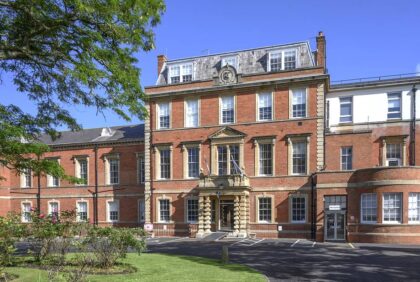
The International Spinal Injuries & Rehabilitation Centre, housed at the Royal Buckinghamshire Hospital in Aylesbury, provides patient centred interdisciplinary rehabilitation programmes for patients with spinal injury, head injury, strokes and neurological conditions.

CONDITIONS TREATED   THE REHABILITATION PROCESS   FURTHER INFORMATION
Rehabilitation Services: Nursing Care STROKE AND NEUROLOGICAL REHAB. The Rehabilitation Process PATIENT CENTRED REHABILITATION

OUR FACILITIES
Our Brochure HOW TO ACCESS OUR SERVICES

CONTACT US & GET FURTHER INFORMATION
SPINAL INJURY REHABILITATION
ORTHOPAEDIC & SPORTS INJURIES


©James Diccon Clarke, The Royal Buckinghamshire Hospital, Buckingham Road, Aylesbury, Bucks, United Kingdom, HP19 9AB


مستشـفى رويـال باكنـهام شـير   . ΔΙΕΘΝΕΣ ΚΕΝΤΡΟ ΣΠΟΝΔΥΛΙΚΩΝ ΚΑΚΩΣΕΩΝ ΚΑΙ ΑΠΟΚΑΤΑΣΤΑΣΗΣ . The Marguerite Centre . Links Stroke Services

The Rehabilitation Process: Rehabilitation can be identified as a whole process of managing disability, with the aim to enable individuals, their families and carers to adjust and cope with their change in circumstances.  It must be based on on-going assessment, planning and evaluation and involve partnership between the individual, their social network and the health and social care team. It typically needs to involve a range of essential disciplines such as a Specialist Consultant, Physiotherapists, Occupational Therapists, Specialist Rehabilitation Nurses/Nurse Consultant, Doctors, Psychologists, Speech and Language Therapists, Psychiatrists, Social Workers, Community Staff and Employers.  However effective rehabilitation is dependent on this group of people functioning as a team, engaged in collaborative goal planning, focusing on the disabled person and their family. At the Royal Buckinghamshire Hospital we focus our rehabilitation upon the trends in Rehabilitation Policy in order to deliver an effective quality service to patients we are aiming to help.  We strive to provide effective rehabilitation services based upon the following principles: Providing interdisciplinary assessment in the acute setting to provide specialist support and advice to prevent secondary complications developing. Staffed by a team of specialist professionals who work as a co-coordinated interdisciplinary team to enable people to transfer skills acquired during therapy sessions to their daily living activities.  The team is currently working towards an interdisciplinary approach.  In rehabilitation this approach is shown not only to be effective, but cost effective in reducing the need for long term care. Delivering well planned, goal orientated rehabilitation programmes to the appropriate intensity for the person concerned, whilst supporting their family and carers to contribute to the rehabilitation process. Having links to the community including social services and housing departments to provide co-coordinated transition of care.  Working with wheelchair services and integrated community services to co-ordinate provision of specialist equipment to meet peoples changing needs. A stroke is caused by a clot or a bleed in the brain which causes brain cells to die. A stroke is the third most common cause of death in the UK and remains the most common cause of severe disability with more than 250,000 people living with disability as a result of Stroke.  Following stroke people may experience: Motor impairment, Weakness or paralysis - this can lead to difficulties in walking, movement or coordination. These often affect one side of the body – known as hemiparesis or hemiplegia.  Lack of feeling - or loss of awareness of objects on one side of the body, known as left- or right-sided neglect, depending on the side affected.  Swallowing difficulties - these can cause trouble with eating or drinking which, if not managed, can result in chest infections including pneumonia as food or liquid passes into the windpipe and lungs instead of the gullet. Dehydration or constipation may also result . Speech or language difficulties - including difficulties in understanding, speaking (dysphasia, aphasia), reading, writing and calculation. Speech and language problems are usually a result of damage to the brain's left hemisphere.  Problems of perception - these can include trouble recognising or being able to use everyday objects such as a kettle or teapot, difficulties telling the time, and problems interpreting what the eyes see, even where vision is not affected. Cognitive difficulties - these include problems caused by damage to areas of the brain controlling mental processes such as thinking clearly and logically, learning, paying attention, memory, decision-making and forward planning. Behaviour changes - these may include being slower to react than before the stroke, excessive caution, disorganisation, finding it difficult to adjust to change and becoming confused or irritated. Difficulties with bowel or bladder control (urinary or faecal incontinence) - these may be caused by a variety of different problems following stroke. These can often be considerably improved or overcome with medical help and physiotherapy.  Fatigue - although a recognised phenomenon, the reason for fatigue is not fully understood. There may be sleep disturbance caused by damage to areas of the brain controlling the body's sleep-wake cycle and it could also be linked to depression. Psychological impairment / mood changes, depression, and changes in cognitive functioning. This can include mood swings, irritability, laughing or crying even when you do not feel particularly happy or sad. Depression is extremely common following a stroke, with symptoms such as loss of appetite, insomnia, crying, low self-esteem and anxiety that can all be signs of depression. Post-stroke pain - a small number of people develop a burning, shooting, throbbing pain that does not respond to painkillers following a stroke. Epilepsy - 7-20 per cent of people who have strokes develop epilepsy. This can usually be treated with anti-epileptic drugs. RECOVERY FROM STROKE AND REHABILITATION: Of people who survive a stroke around half will be left with significant disability Having said that, the brain is remarkably adaptable and in the months or years after a stroke many cells that have sustained damage recover some of their function. At the same time other areas of the brain take over the functions performed by the cells that have died. The time it takes to recover is extremely variable. However, commonly people have a surge of recovery in the weeks following a stroke followed by a slower recovery over the next year to 18 months or so.  Rehabilitation following stroke is about the process of achieving the best level of independence as possible by: Learning new skills. Relearning skills and abilities. Adapting to the physical, emotional and social consequences of the stoke. Multiple Sclerosis: Between 3 and 7 people per 100,000 of the population are diagnosed with MS each year and usually starts in early life, there is no cure and the person lives with the diagnosis for life.  MS is a disease of the central nervous system and where the white matter within the brain or spinal cord becomes inflamed and then destroyed by the person’s  own immune system.  This results in scarring to some areas of the brain or spinal cord.  Many of these episodes do not cause symptoms, but when sudden symptoms occur the person is said to have had a relapse. Parkinson Disease It is estimated that 100-180 per 100,000 of the populations are effected by Parkinson’s Disease.  PD is a progressive neurodegenerative condition leading to the death of dopamine containing cells of the substantia nigra.  People generally present with bradykinesia (slowness of voluntary movement and speech), rigidity and rest tremor.  Though it is predominantly a movement disorder, though people can develop psychiatric problems such as depression and dementia. Our interdisciplinary team of Consultant, Neurological Physiotherapist, Occupational Therapist, Nursing Staff, with access to Speech and Language Therapist and Neurological Psychology aim to provide a client centred, goal orientated approach to rehabilitation.  The patient is enabled to play an active part in making informed decisions in all aspects of their rehabilitation, empowering them to set realistic goals to achieve their optimum rehabilitation potential.  Our skilled nursing team is able to assist the patient to plan their care on a daily basis, including personal care, bladder and bowel management and wound care.  SPINAL INJURY: A spinal cord injury is damage or trauma to the spinal cord that results in a loss or impaired function resulting in reduced mobility or feeling. It is often caused by trauma e.g.: a car  accident, gunshot, falls, sports injuries, or a disease e.g.:Transverse Myelitis, Polio, Spina Bifida, Friedreich's Ataxia, The resulting damage to the cord is known as a lesion, and the paralysis is known as quadraplegia or tetraplegia if the injury is in the cervical region (see diagram), or as paraplegia if the injury is in the Thoracic, Lumbar or Sacral region. It is estimated that there are 40,000 people in the UK alone that are paralysed through spinal cord injury.  The spinal cord is part of the central nervous system and carries signals to and from the brain, controlling almost every function of the body.  When there is damage or trauma to the spinal cord it will result in loss or impaired function causing reduced mobility and/or feeling.  The effects of spinal cord injury depend on the type and level of the injury.  Injuries can be divided into two areas: Complete - means that there is no function, (no sensation or voluntary movement) below the level of the injury. Incomplete – there is some function below the level of injury.  A person may be able to feel parts of the body that cannot be moved, they may be able to move one limb more than the other. HOW WE CAN HELP: Our interdisciplinary team of Consultants, Nurses, Occupational Therapist and Physiotherapist offer full assessment and comprehensive inpatient rehabilitation programmes.  The rehabilitation programmes are patient centred, goal orientated to enable the patient to play an active part in making informed decisions in all aspects of their rehabilitation.  Our skilled nursing team is able to assist the patient to plan their care on a daily basis, including personal care, bladder and bowel management and wound care.  Along with the physiotherapist and occupational therapist the team encourage patients to participate in and return to normal living, including return to work, family or education. Rehabilitation Services include Bowel and Bladder Management, Calliper Training, Driving Assessments and Lessons, Fertility Advice, Functional Electrical Stimulation, Hydrotherapy, Mobilisation after Surgery, Occupational Therapy, Physiotherapy, Psychological Counselling, Skills Honing and Top-up Rehabilitation, Speech and Language Therapy, Splinting, Teaching Activities of Daily Living, Treadmill Therapy, Wheelchair and Cushion Assessments, and Wound and Pressure Care.